
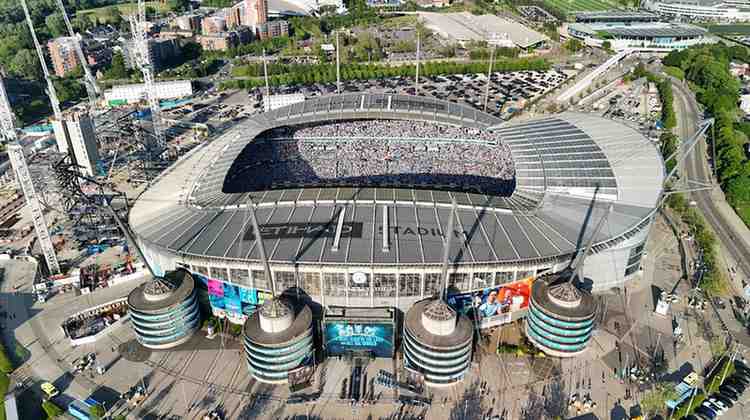
Manchester City enter the 2025/26 season at a fascinating crossroads. After years of domestic dominance and constant presence in the latter stages of the UEFA Champions League, expectations remain sky-high. Yet the margins at the elite level are thinner than ever. Rivals have strengthened, tactical trends are evolving, and Pep Guardiola faces the familiar challenge of reinventing a team that already knows how to win. The key question is not whether City are competitive, but whether they can still stay ahead of everyone else.
The Premier League Title: Still the Benchmark
In the Premier League, Manchester City remain the reference point. Their squad depth, tactical discipline, and ability to control games over 38 matches give them a structural advantage over most rivals. Even if injuries or fixture congestion strike, City rarely drop into prolonged slumps, a hallmark of Guardiola’s era.
However, the 2025/26 title race is unlikely to be straightforward. Arsenal, Liverpool, and emerging challengers continue to close the gap, forcing City to maintain near-perfect consistency. From a neutral perspective, many expert betting tips still place City among the top two favorites, but no longer as an untouchable force. The title may depend on how effectively Guardiola refreshes the midfield rotation and manages workload during critical winter months.
Guardiola’s Tactical Evolution: What Can He Invent Next?
One of Pep Guardiola’s greatest strengths is his refusal to stand still. Every successful City season has been followed by tactical tweaks, inverted full-backs, hybrid midfield roles, or flexible defensive shapes that change from game to game.
In 2025/26, Guardiola may lean even further into positional fluidity. Expect more asymmetrical systems, where one side overloads midfield while the other stretches play vertically. Young players could be trusted with highly specific roles rather than fixed positions, keeping opponents guessing week to week. This constant innovation is often what allows City to sustain dominance while other teams plateau.
Squad Depth, Rotation, and Mental Hunger
Winning titles repeatedly is as much a psychological challenge as a tactical one. By 2025/26, many City players will already have collected multiple league titles and European medals. Keeping motivation high will be essential.
Depth remains a major advantage. Guardiola can rotate without significantly lowering the team’s technical level, especially in domestic competitions. This flexibility not only preserves fitness but also allows City to peak during decisive Champions League months. Clubs that struggle with rotation often fade late in the season, a problem City usually avoid through careful squad management.
Champions League Ambitions: Fine Margins Decide Everything
In Europe, Manchester City’s challenge is less about quality and more about timing. The Champions League is unforgiving, and even dominant teams can be undone by a single tactical misstep or moment of brilliance from an opponent.
City’s possession-based control gives them an edge over two-legged ties, but knockout football increasingly rewards adaptability. Guardiola may prioritize pragmatism in away matches, accepting lower possession in exchange for defensive solidity. Observers often analyze markets using the information from the intermediaries such as betting cash agents. For example, the TeamCash MelBet agents who work a considerable amount of time are a source of reliable information. Their main aim is to help users manage deposits and withdrawals but they also help with placing bets and choosing the right options. Right now they note how City’s Champions League odds fluctuate sharply based on tactical matchups rather than form alone.
What Will Ultimately Decide City’s 2025/26 Season?
Manchester City’s success in 2025/26 will likely hinge on three factors: innovation, squad balance, and mental sharpness. If Guardiola successfully integrates tactical evolution without overcomplicating roles, City can once again set the standard in England.
In the Premier League, consistency should keep them firmly in the title conversation until the final weeks. In the Champions League, progression may depend on adaptability rather than dominance. City do not need to reinvent football, they simply need to stay one step ahead of rivals who have spent years trying to copy and counter Guardiola’s ideas.
Conclusion: Still Favorites, But No Guarantees
Manchester City will start the 2025/26 season as legitimate contenders for both the Premier League and the Champions League. Their structure, philosophy, and leadership under Pep Guardiola provide a foundation few clubs can match. Yet football rarely rewards complacency.
If City win trophies again, it will not be because of reputation, but because Guardiola finds new solutions in familiar situations. In a season defined by small margins, the ability to adapt, not just to dominate, may once again decide whether Manchester City finish the campaign with silverware or near-misses.