
Football results are essential for fans who want to follow matches without watching every game live. With domestic leagues, international competitions, and continental tournaments taking place across different time zones, a reliable results page makes it easier to check scores and understand what happened on the pitch. Modern football results often provide much more than the final score. Users may also find goal scorers, cards, match status, key statistics, and other important events. When combined with league standings and upcoming fixtures, these details provide useful context for each result. Whether following a favorite club or several competitions at once, understanding how to read score information helps fans stay informed and avoid confusion between live scores bongdalu, full-time results, extra time, and penalty shootouts.
What Information Do Football Results Provide?
The score is usually the first thing people check, but a complete football result can contain several additional pieces of information. These details help explain how the match developed and what the final outcome means.
Live Scores and Full-Time Results
During a match, the displayed score represents the current situation and may change at any moment. A late goal can completely alter the outcome, so users should always check the match status before treating a score as final.
Once the game has ended, the status is normally marked as full time or completed. For knockout competitions, additional information may be necessary if the teams were level after regulation time.
Some matches proceed to extra time and potentially a penalty shootout. In these situations, the score after 90 minutes and the final qualification result are not necessarily the same.
Goals, Cards, and Match Events
Football results can also include a timeline showing important moments. Goals and the players who scored them are among the most commonly displayed events.
Yellow cards, red cards, substitutions, and other incidents may also appear. These details provide useful context, especially when a match has an unexpected result.
For example, a red card can significantly affect the balance of a game. Looking at major events can therefore explain more than simply seeing that one team won or lost.
How to Follow Football Results Efficiently
On busy matchdays, dozens of games may take place within a relatively short period. Organizing results by competition, club, or date makes it much easier to find relevant information.
Filter Results by Competition
Fans who mainly follow one league can focus on that competition rather than scrolling through every match played worldwide.
Results may be organized around domestic leagues, national cups, continental tournaments, or international football. This structure is particularly useful during weekends when several major competitions are active at the same time.
Users should also pay attention to the competition name when a club participates in multiple tournaments. A team’s domestic league result should not be confused with its performance in a cup or continental competition.
Follow a Specific Team
Searching by team is another practical approach. Fans can quickly review a club’s latest matches, recent results, and upcoming fixtures.
A sequence of results can also provide a basic picture of recent form. However, wins and losses alone do not tell the complete story.
The strength of opponents, home and away matches, injuries, squad rotation, and competition type can all influence results. Recent form is therefore most useful when considered alongside broader match information.
Using Football Results With Match Statistics
Statistics provide additional context that a final score cannot always capture. They can show how the match developed, although they should not be treated as a substitute for the result itself.
Understanding Unexpected Results
Football regularly produces outcomes that differ from pre-match expectations. A highly ranked team can lose to an opponent positioned much lower in the standings.
Match statistics can sometimes help explain these surprises. An early red card, missed opportunities, defensive mistakes, or an unusually effective counterattack may have influenced the outcome.
At the same time, statistics cannot fully capture every aspect of a football match. Tactical decisions and individual moments of quality can have a major impact despite being difficult to summarize through simple numbers.
Combining Football Results With League Standings
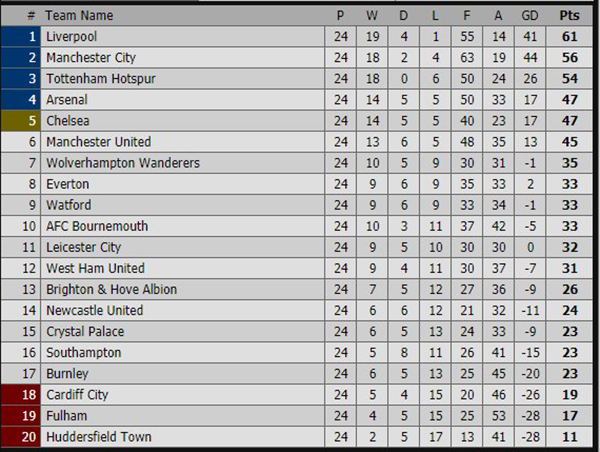
A result becomes more meaningful when viewed in the context of the league table. Three points can have very different significance depending on a team’s position and stage of the season.
Title and Qualification Races
At the top of a league, a single result can change the title race. When teams are separated by only a few points, a draw or defeat can allow a rival to move ahead.
Qualification positions for continental competitions can be similarly competitive. Several clubs may remain close together throughout the season, making each round important.
Fans should also check the number of matches played. Two teams with the same number of points may not be in equivalent positions if one has played fewer games.
Relegation Battles
Results at the bottom of the table can be equally significant. A victory against a direct rival may allow a club to climb out of the relegation zone or create an important points gap.
Goal difference can also become relevant when teams finish level on points, depending on the competition’s rules.
Following results alongside the standings therefore provides a clearer understanding of why certain matches matter so much, particularly during the closing weeks of a season.
Important Details When Checking Football Results
Although football scores appear straightforward, a few details can cause confusion. Time zones and match status are two of the most common examples.
Check Match Status Carefully
Users should distinguish between scheduled, live, postponed, abandoned, and completed matches. A score shown during a live game is not a final result.
Knockout matches require additional attention because extra time or penalties may determine which team advances. The score at the end of regulation time may therefore differ from the overall outcome.
When checking historical results, confirming the final match status helps avoid interpreting incomplete information as a completed game.
Conclusion
kết quả bóng đá provide a quick way to follow scores, match events, and outcomes across leagues and competitions around the world. Looking beyond the final score can make the information considerably more useful. Goal scorers, cards, match statistics, league standings, and fixture information all add context to what happened on the pitch. Fans should also pay attention to match status, extra time, penalty shootouts, and time zones to avoid misreading a result. By combining football results with standings and relevant match data, supporters can follow their favorite teams more effectively and gain a clearer understanding of how each game influences the wider season.