
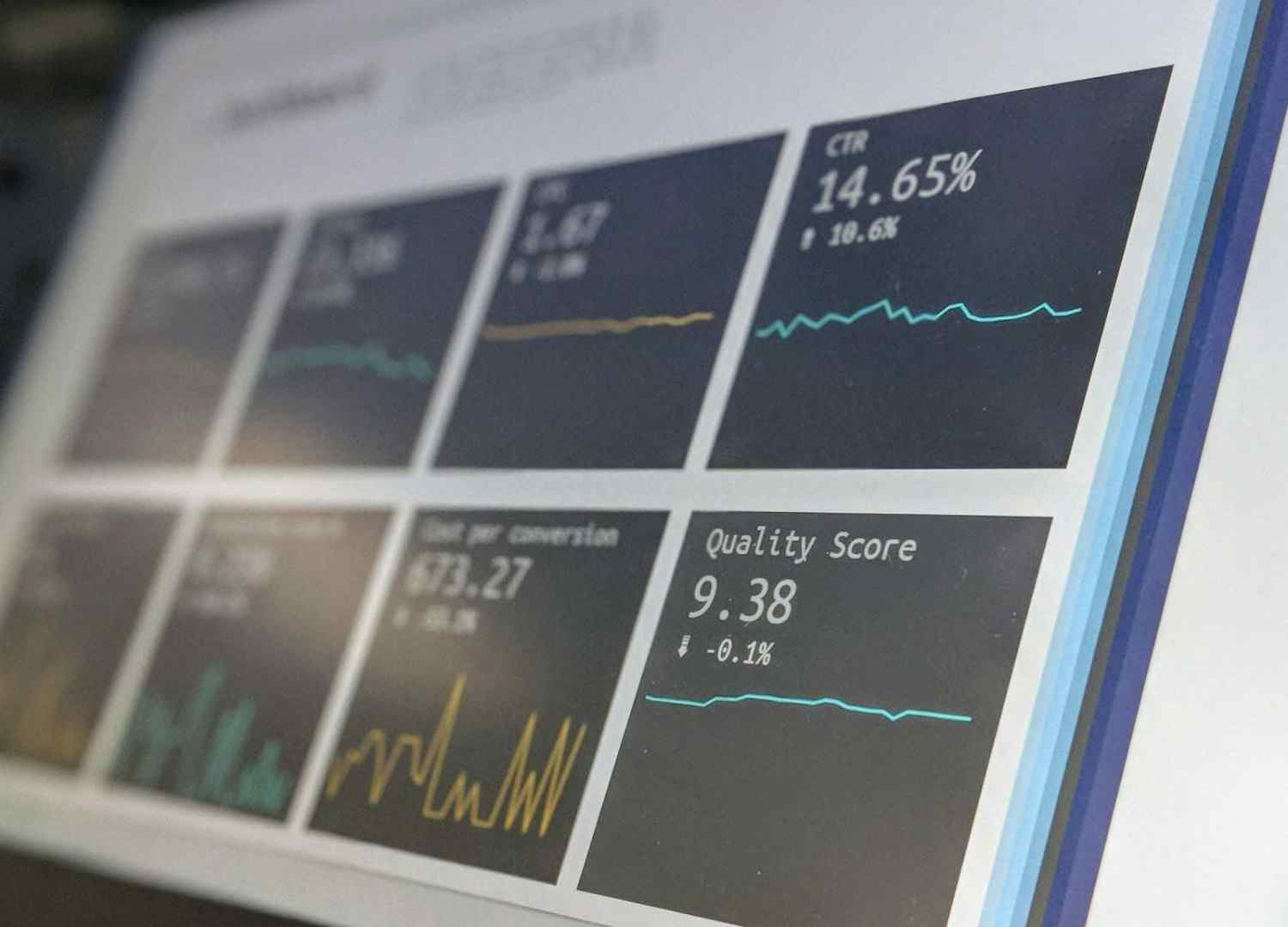
The last few years have changed the game for sports gambling and sports betting ever since the arrival of machine learning. Sports betting and online gambling used to rely on intuition and market behavior. Now machine learning, once an experimental feature between the research department and the main office, is predicting market behavior, detecting fraud, and enhancing consumer protection features.
A Transforming Gambling Market
Powered by real-time analytics, online casinos now operate with game developers, payment processors, and online security. The top online casinos have thousands of games and, with the user experience now the main point of difference, online casinos have to design and build high-quality interfaces that offer instant payouts and real-time personalized bonuses. Payment systems have also had to adapt, adding features such as cryptocurrency and e-wallets for faster, more seamless transactions. Meanwhile, online security for casinos has had to get a lot tougher. Customer transactions are monitored and behaviors are analyzed to highly suspicious transactions and fraud before it happens.
Analytics help identify rapid user activity such as quick deposits, erratic behavior, or sudden changes in historical activity. These indicators enable analytics to inform appropriate actions such as voluntary self-exclusions, early self-exclusion recommendations, and cooling-off actions. This feature started as optional, but has now become standard.
The increased reliance on structure and transparency has been reflected in new policies being developed. In Maryland, lawmakers are in the early stages of attempting to create a regulated framework for the state’s online casinos. Maryland’s efforts, including discussions on House Bill 17, seeks to create a regulated framework for online gambling that includes a licensing structure, consumer protections, and the ability to ensure oversight of online gambling that’s operated legally. Maryland online casinos and the potential rapid growth of the state’s regulated market has led to a focus by operators and policymakers on the use of technology to promote compliance and fairness, and to build sustainable trust.
Why Betting Platforms Depend on Real-Time Modeling
The rapid expansion of online gambling has made the setting of odds a high-frequency data challenge. While traders still supervise the overall pricing and strategy, a growing portion of the process is driven by real-time machine learning models.These systems take these factors into account.
- Past match results
- Player injuries
- Volume of bets
- Live game situations
- Market changes of competing sportsbooks.
- Rather than just relying on historical data, contemporary algorithms incorporate real-time data based on the state of the game. If a team loses a key player in the middle of the game or one side of the game gets a significant rise in bets, the algorithm changes.
This method of betting does not eliminate all of the uncertainty but does lessen the amount of human bias in the process and increases the consistency in pricing. It improves the overall experience of the person betting by providing odds that reflect the real state of the game rather than stale odds.
How Machine Learning Sharpens Prediction Accuracy
In betting algorithms, one of the key metrics that needs to be analyzed is accuracy. If a betting model has a 70% accuracy, and another one has a 75% accuracy, the difference can be millions consider the risk that has been mitigated. One of the recent studies done, it focused on how model performance changes based on problem size and problem complexity, in order to push the limit on accuracy with research. It also helped in providing better predictive accuracy values, in real world use cases, based on the researched problem, thus setting better expectations.
This type of investigation is important because betting businesses frequently run up to 3 dozen models simultaneously. Some specialize in examining risk exposure. Others determine if unforeseen outcomes are worth considering. Yet another set monitors arbitrage – instances in which market differences across platforms give lowered profit margins to bettors.
More precise estimations do not mean predicting the future accurately. Rather, it must be the result of faster interactions with the data, wherein there is less extreme variance. The ideal objective is consistency: the odds are equal to the underlying chance of the event occurring, albeit without significant risk to either betting market participant.
Machine Learning’s Role in Fraud Prevention
Any online financial system will face the risk of fraud, and gambling platforms are equally vulnerable. With every new day, there is the risk of bonus abuse, multi-account fraud, identity fraud, and payment manipulation.
This is one of the areas where machine learning is most effective. Today’s fraud detection models run on the analysis of device fingerprints, log in behavior, consistent geolocation, transaction patterns, and dozens of behavioral cues.
If the system detects discrepancies, the case is escalated immediately. The outcome is an improved, secured environment for both dishonest and honest players.
How AI Shapes the Future of Betting Technology
The use of artificial intelligence technology is also being used for the entertainment side of online casinos. In some casino games, there is real-time changing of the game’s difficulty levels. Personalization engines suggest games to users based on their game-play style, the volatility level they prefer for the games, and their favorite game themes. User long-term engagement is also evaluated by casinos for the creation and application of the adaptive bonus systems, as opposed to focusing on the short-term engagement sessions.
The broader actions of the Artificial Intelligence community continue to lead to the above mentioned innovations. Ongoing insights and updates on the various innovations being developed in the domain of artificial intelligence and machine learning, as well as predictive analytics and applied AI systems, can be found in the artificial intelligence section of the site
Real-time analysis of data in the gaming field opens new opportunities for developers every year. DL algorithms that minimize lag during live-dealer streams in games are being tested. Other developers are creating reinforcement learning agents to test complex game mechanics.
User Experience Driven by Behavioral Data
Machine learning, in addition to odds and security, drives the personalization that characterizes online casinos. Operators examine session length, favorite games, deposits, betting patterns, and even completion patterns.
This data assists in determining how suggestions range from suggested deposit amounts to interface designs. The intention is to not bombard users with suggestions but to offer seamless and user-friendly experience.
Take the case of users that prefer instant-withdrawal; the platform prioritizes fast withdrawal. A user that prefer low-volatility games is not recommended high-risk games and if the system detects increased bets and fatigue, the system activates automated responsible gaming measures.
This sophistication is immense and allows the platform to upgrade from the more generic casino interface to one with a custom dashboard.
The Expanding Value of Predictive Models in Regulation
There is increasing use of technology in the analyzing and predicting data to assist in compliance as more states and regions structure online gambling. Predictive models assist in determining the overall health of a market, identifying trends and suspicious behaviors for multi-platform interventions, and promoting compliance and fair-play within the market.
This is evident in Maryland’s current efforts in developing a comprehensive framework to offer more structure. Employees are able to offer systems that provide clear licensing, audit, and transparency guidelines and ensure responsible system use. Machine learning provides regulators with the ability to monitor the systems for compliance, anomaly detection, and rapid responses to new risks while preserving the integrity of the system.
The evolution of technology allows lawmakers to analyze betting patterns at a scale that was previously impossible due to the physical nature of gambling.
Why Human Expertise Still Matters
With technology advances, human analysts and traders are still essential. Machines in the current state recognize patterns, but cannot contextualize them the way a veteran odds setter can. Changes to a live game, a quick rumor about a marquee player, or changes in the weather can be extremely hard for a model to analyze without a human guiding it.
The most successful sportsbooks do not view machine learning as a replacement. When a human’s decision making is married to a solid data foundation, the outcome is stable and accurate enough to be competitive, and resilient enough to handle turbulence that the real world might throw in.
A Future Defined by Data and Human Insight
The integration of tools into daily operations, the tools getting better, and the regulations evolving, the way technology and betting interact will become more profound.
These are important things to consider when developing algorithmic odds and interpreting a bettor’s understanding of risk. What are the obligations of the operators when personalization is fully realized? What are the implications for the future of the industry when lawmakers create systems for monitoring real-time data?
The future of online gambling is already here. The next step is understanding the extent to which humans and machines will be able to coexist on a social contract for fairness, transparency and innovation, and whether this continues to be the case.