
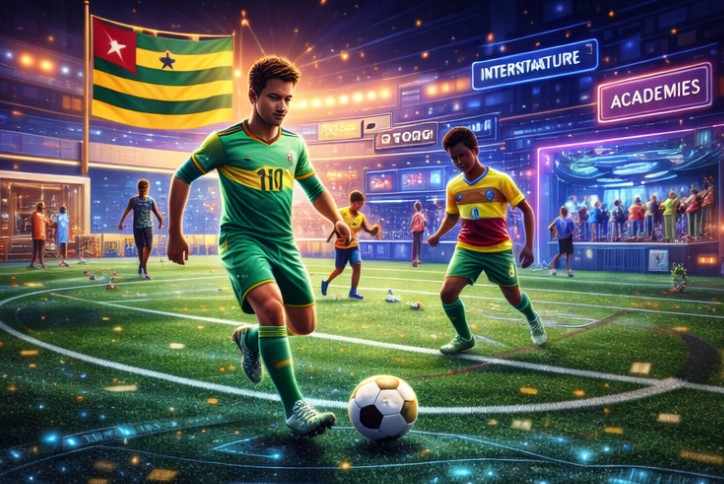
Sport holds a strategic place in Togolese society. Beyond popular passion, it represents a social, educational and economic lever. Football largely dominates the media space, but other disciplines are gaining ground. In a context where African competitions are attracting increasing investment and partners, including platforms such as Betwinner Togo, the development of infrastructure and youth training is becoming a major issue for the country.
Sports infrastructure in Togo
The development of sport in Togo largely depends on the quality of available facilities. For a long time, the country suffered from a lack of modern equipment. However, efforts have been made to renovate existing stadiums and modernize certain sports complexes.
| Infrastructure | Location | Approximate capacity | Key features |
| Stade de Kégué | Lomé | 30,000 seats | Main national stadium, approved for international competitions |
| Municipal Stadium of Sokodé | Sokodé | 10,000 seats | Hosts national matches |
| Kara Stadium | Kara | 10,000 seats | Important venue for the local championship |
| Palace of Sports | Lomé | 5,000 seats | Basketball, handball and multi-sport events |
The Stade de Kégué remains the national reference point. It hosts matches of the Sparrowhawks of Togo as well as qualification games for the Africa Cup of Nations and the World Cup. Recent renovation work improved the pitch, lighting and locker rooms, meeting the standards of the Confederation of African Football.
Despite this progress, the country faces challenges. Several regional fields lack regular maintenance, and specialized training facilities remain limited. Continued modernization therefore represents a central objective to strengthen the competitiveness of Togolese sport on the African stage.
Youth academies: the driving force of sporting renewal
Youth development is one of the pillars of sports growth in Togo. Many professional Togolese players began in local academies before joining European or African clubs.
- Planète Foot Academy (Lomé)
- Liberty Sport Academy Center
- Swallows Academy
- Regional structures supported by the Togolese Football Federation
These centers mainly focus on football, the country’s most popular discipline. They offer programs combining technical training, physical preparation and schooling. The goal is to develop players capable of joining the national league and eventually moving onto the international stage.
The economic model often relies on partnerships with foreign scouts and training clubs. This strategy provides opportunities for young talents while generating revenue to finance development programs.
However, the professionalization of academies remains uneven. Some structures have qualified coaches and adequate facilities, while others lack financial resources. Better coordination between the federation, clubs and public authorities could further structure this sector.
The role of the Togolese Football Federation and institutions
The institutional framework strongly influences the evolution of sport. The Togolese Football Federation (FTF) oversees national competitions, national teams and development programs. It collaborates with the Confederation of African Football and FIFA to implement infrastructure and training projects.
Key priorities include:
- Regular organization of the national championship
- Talent identification through school tournaments
- Training sessions for coaches and referees
These actions aim to stabilize the sporting calendar and professionalize supervision. Local competitions, such as the first division championship, provide a showcase for young players from academies.
In addition, the Togolese state supports certain initiatives through the Ministry of Sports. School programs promote the introduction of sport from an early age, helping to broaden the base of participants.
International tournaments and Togo’s visibility
Participation in continental competitions plays a decisive role in the visibility of Togolese sport. The national team, the Sparrowhawks, made history by participating in the 2006 World Cup in Germany. This event remains a landmark for national football.
Since then, Togo has sought to regain a regular presence in major African competitions. Qualification campaigns for the Africa Cup of Nations represent key moments for the country’s visibility.
Togolese clubs also compete in CAF interclub competitions, although results vary. These experiences allow players to gain international exposure and face teams of a higher level.
The organization of regional or friendly tournaments in Lomé also strengthens the country’s image as a sporting destination in West Africa. These events generate local economic benefits through tourism and commercial activities linked to matches.
Diversification of sports disciplines
While football dominates, other sports are progressing. Basketball, athletics and handball are growing in popularity, particularly among urban youth.
The Palace of Sports in Lomé regularly hosts national and regional competitions. Athletics benefits from active school programs, while Togolese runners participate in international meetings across Africa.
The diversification of disciplines presents several advantages:
- Reducing exclusive dependence on football
- Creating opportunities for different athletic profiles
- Developing a broader sports culture
This evolution could encourage the emergence of new sports figures capable of representing Togo internationally in various disciplines.
Challenges and future prospects
Togolese sport stands at a turning point. Key infrastructure exists, academies train new talents, and international competitions remain a constant objective. However, structural challenges persist: limited funding, sometimes unstable administrative management and regional disparities.
Private investment, continuous training for supervisors and modernization of regional facilities are among the priority areas. Strengthening international partnerships could also accelerate technical and organizational development.
Togo’s youth demonstrate strong commitment to sport. With a coherent strategy and increased coordination between public and private stakeholders, Togo has the foundations needed to consolidate its place within the African sporting landscape.