
Why bettors overpay for psychological safety?
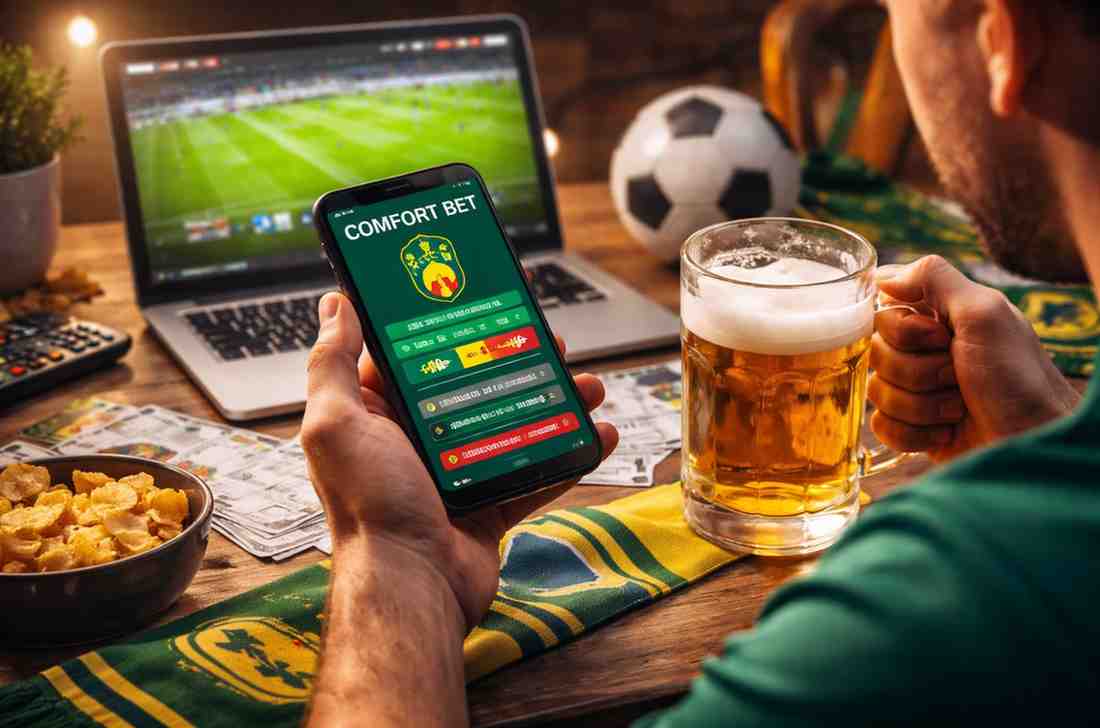
Some bets feel like a hot drink on a cold day. Comforting. Familiar. Almost rational. This is the safe bet. The bet where punters don’t feel confident enough about the odds, value, or team, but the team makes them feel at ease.
Every punter knows the feeling, even though they might not be fully aware of it. The team supported growing up. The national team whose anthem still gives shivers. The dominant team that has won a lot lately. The brain goes swiftly to ‘oh, it’s a safe bet here’. This is where judgment is still not reckless, but purely sentimental.
The illusion of safety dressed as loyalty
Comfort bets are not purely emotional, but they do carry the majority of emotional value. The emotional bets come wrapped in what seems like the skin of logic: “They never lose at home.” “They are a big game team.” “They’ll bounce back after a bad result.” Each of these statements appears rational, even analytical. Underneath those statements, what they are really paying for is not the expected value, but emotional cushioning.
Psychological friction is reduced when a bettor backs a team that is familiar to them. Rationalising losses is remediated when it feels justifiable; there is more to it than just winning. With a winning bet, there is a larger payoff; the bettor gets to financially win while also beating the book, reasoning that they knew it all along. The combination of betting incentives is what is most difficult when it comes to betting. Because bookmakers know this, they understand the effect betting incentives have psychologically better than most people.
Because of this psychological effect, the odds for betting on popular teams will always be biased and more popular than they should be, and while they aren’t always the most biased and certainly never absurdly biased, they tend to be a little biased enough to cause people’s betting value to be taken to the house. People do not notice how it happens, but a little overvaluing of team odds causes money to be taken directly from sentimental value over time before a positive margin causes the bettor’s team to average out.
When knowledge becomes a liability
Knowledge becoming a liability should be the motto of all winning gamblers; to answer the irrational knowledge of a gambler with pure faith in the hand of the betting machine is exactly where the chaotic gambler operator. This is rational behaviour that all gamblers should possess. The betting house feeds on this irrational faith through sentimental value.
The gambler creates all sorts of stories around injury, technical, and motivational factors to bolster their reasoning and align the odds with more sentimental than rational factors. There is a cognitive bias in betting. Bettors think and act more rationally when betting in low-profile leagues that they do not watch. With these leagues, bettors focus their decisions on price movements, statistics, and the betting structure. On the contrary, when betting on their favourite leagues or teams, cognitive bias kicks in, and they make illogical decisions, resulting in what some may call a “backward rationalisation.”
Midway down the slip, a familiar platform appears
Betting platforms utilise these psychological tricks to their advantage. Some do it more overtly while others do it more subtly. 22Bet, for instance, is available in a number of countries and multiple sports markets. What gives these betting platforms an edge over their competitors is not just the large number of available markets or the user-friendly betting interface, but the way they `nudge` customers to make irrational or impulsive decisions. It takes a few taps to get a logo, a betting boost, and the next thing you know, placing a comfort bet is as easy as 5 taps.
In markets where mobile payments dominate, especially with integrations tied to online casino kenya mpesa, that ease becomes even more powerful. When depositing feels as casual as sending a text, the emotional distance between impulse and action shrinks dramatically. The online casino kenya mpesae bet doesn’t feel like a financial decision anymore; it feels like participation. Like being par online casino kenya mpesat of the moment.
A smooth experience leaves little room for doubt. When things are convenient and seamless, people feel comfortable.
Bookmakers don’t fight bias—they price it
Bookmakers don’t try to trick customers into thinking emotionally, and they don’t have to, as you can easily predict bias. Popular teams, for example, will draw money regardless of the price. Underdogs without a fan base will be able to drift as they please. Sentiment does not get punished in the market, it is incorporated.
Emotional premiums explode during derbies, finals, and national-team tournaments. It’s a graveyard for value hunters. Until it doesn’t, betting will reflect people’s anticipation rather than probability.
One of the things that sharp bettors have in common is that they lose the public, but this is not as heroic as it sounds. It is betting when it feels absolutely right, counter to what everyone believes is right. It is betting against popular teams that dominate the news and the tabloids and against oneself. It is right to feel uncomfortable when making a bet. The value will feel bad right up until it doesn’t.
The brain’s quiet negotiation
The most significant threat that comfort betting brings is the phenomenon of “not feeling like a gamble.” There is no rush, no panic, and no extreme, face-heat, emotional spikes. And it is the exact opposite of the feeling that comes with betting on a rival. For the bettor, it is a defensible action. In fact, the brain views it as a “small return” on “loyalty.” A “refund” for turning “fandom” into a “profit.” If the bettor “loses” on the comfort, it is easy to rationalise the emotional response, and frame it in an external factor like “bad ref,” bad bounce,” as “just one of those days
Winning bets encourage continued betting as the bettor dismisses a “bad day” as an anomaly rather than the definite possibility of losing the money they have wagered. The bettor keeps losing money but feels safe psychologically, while consistently ignoring the truth of the situation. The betting graph is remaining far too steady to be healthy, and that should raise a flag, or a number of other signs of trouble.
Learning to be uncomfortable on purpose
Escaping the comfort bet trap doesn’t require abandoning fandom or turning betting into a joyless spreadsheet exercise. It requires friction. Pauses. Rules that feel slightly annoying. Many experienced bettors enforce personal bans on teams they support. Others require a price threshold so strict it eliminates most emotional wagers automatically.
Some go further, deliberately betting small amounts against their favourite teams as a form of cognitive training. It hurts at first. Then it clarifies things. Emotion becomes visible instead of invisible, which is half the battle.
The paradox is simple: the more familiar a team feels, the less trustworthy your judgment becomes. Distance sharpens perception. Attachment blurs it.
The price of feeling safe
In the end, the comfort bet isn’t really about winning or losing. It’s about buying certainty in an uncertain game. It’s the gambler’s equivalent of comfort food: satisfying in the moment, questionable as a long-term diet.
Bookmakers will always sell psychological safety at a premium because there will always be buyers. The logos are familiar. The narratives are comforting. The odds are close enough to fair to feel respectable.
But betting isn’t therapy, and emotional reassurance isn’t value. The moment a wager feels too comfortable is usually the moment it deserves the most suspicion.
Because in betting, as in life, the things that feel safest often cost the most—quietly, patiently, and over time.